Introduction
John Milton’s sonnet “On His Blindness” is a deeply reflective and philosophical poem that explores faith, patience, and human purpose in the face of suffering. Often introduced with the famous opening line “when I consider how my light is spent”, the poem captures Milton’s personal struggle after losing his eyesight at a relatively young age. Commonly referred to as “Milton on his blindness”, the poem reveals how the poet wrestles with fear, guilt, and doubt about his ability to serve God without his physical vision.
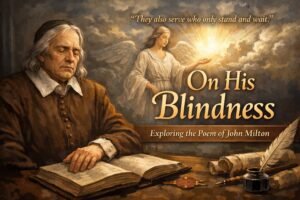
In “on his blindness poem by John Milton,” the phrase “how my light is spent” symbolizes both his literal blindness and the loss of his creative and intellectual power. Milton worries that he can no longer use his God-given talent—his “one Talent”—and fears divine punishment for being unproductive. This inner conflict highlights a key theme of the poem: the tension between human effort and divine will. The speaker questions whether God expects labor even when a person is physically incapable of working.
The turning point of the sonnet comes when Patience, personified as a guiding voice, answers his doubts. Patience explains that God does not need human work or achievements; instead, true service lies in humble acceptance. This leads to the poem’s most famous and reassuring line: “they also serve who only stand and wait.” Through this realization, Milton finds peace, understanding that enduring suffering with faith and obedience is itself a form of service to God.
In conclusion, On His Blindness is not merely a poem about physical disability but a powerful meditation on faith, duty, and submission to divine purpose. Through introspection and spiritual insight, Milton transforms personal loss into moral strength, teaching readers that patience, trust, and quiet endurance are just as meaningful as active labor. The poem remains timeless because it speaks to anyone who has ever questioned their worth during times of limitation or hardship.
Line-by-Line Explanation of On His Blindness
Line 1: “When I consider how my light is spent,”
This opening line — often quoted as “when I consider how my light is spent”—shows Milton reflecting on his blindness. The word light symbolizes both his eyesight and his intellectual or poetic ability. He feels sorrow thinking about how his vision has been used up too early in life.
Line 2: “Ere half my days, in this dark world and wide,”
Here, Milton expresses grief that he became blind before reaching middle age. The “dark world” refers both to literal darkness caused by blindness and the emotional darkness he feels living without sight.
Line 3: “And that one Talent which is death to hide,”
The “Talent” refers to the biblical Parable of the Talents. Milton believes his poetic gift is a responsibility given by God. He fears that hiding or failing to use it because of blindness could be sinful.
Line 4: “Lodged with me useless, though my soul more bent”
Milton says his talent still exists within him, but it feels useless now. His soul still strongly desires to serve God, even though his physical condition limits him.
Line 5: “To serve therewith my Maker, and present”
This line shows Milton’s deep religious devotion. He wants to use his abilities to serve God and offer meaningful work to Him.
Line 6: “My true account, lest He returning chide;”
Milton fears that God may scold him on Judgment Day for not using his gifts properly. This reflects his anxiety about spiritual responsibility.
Line 7: “Doth God exact day-labour, light denied?”
Here, he asks a direct question: Does God expect daily labor from someone who has been denied sight? This moment shows Milton’s inner conflict and honest doubt.
Line 8: “I fondly ask. But Patience, to prevent”
Milton admits that his question is foolish (“fondly” means foolishly). He introduces Patience as a personified voice that interrupts his despair.
Line 9: “That murmur, soon replies, ‘God doth not need”
Patience answers gently, explaining that God does not depend on human effort or achievements.
Line 10: “Either man’s work or His own gifts; who best”
This line reinforces the idea that God is self-sufficient. Human talents are not necessary for Him, but obedience and faith matter more.
Line 11: “Bear His mild yoke, they serve Him best.”
Those who accept God’s will patiently and humbly serve Him in the truest sense. Service is not only about action but also submission.
Line 12: “His state is kingly; thousands at His bidding speed”
God is portrayed as a powerful king with countless angels ready to carry out His commands instantly.
Line 13: “And post o’er land and ocean without rest;”
These servants travel everywhere to fulfill God’s orders, showing that active service is already abundantly available to Him.
Line 14: “They also serve who only stand and wait.”
This famous concluding line delivers the poem’s central message. “They also serve who only stand and wait” means that patient endurance, faith, and acceptance of God’s will are also valid forms of service. Even without action, a person can serve God through trust and perseverance.
Final Insights
The on his blindness poem by John Milton transforms personal suffering into spiritual wisdom. Through the reflection how my light is spent, Milton moves from frustration to acceptance, finally realizing that God values devotion over productivity. The poem teaches that limitation does not equal uselessness, and that quiet faith can be as meaningful as great action — because they also serve who only stand and wait.
Below is a detailed, well-structured explanation of the themes of On His Blindness, carefully using your required keywords: on his blindness poem theme, on his blindness theme, theme of on his blindness, and theme of the poem on his blindness.
Themes of On His Blindness by John Milton
The on his blindness poem theme revolves around faith, patience, duty, and acceptance of human limitations. Written after Milton lost his eyesight, the poem expresses deep inner conflict but ultimately offers spiritual reassurance. Each theme contributes to the poem’s powerful moral and philosophical message.
-
Theme of Loss and Human Limitation
One of the central aspects of the theme of the poem on his blindness is the pain of physical loss. Milton reflects on how blindness has taken away his “light,” which symbolizes both vision and creative ability. Through the phrase “when I consider how my light is spent,” the poet reveals his sorrow at losing the capacity to work and write as he once did.
This theme highlights how human beings must face limitations beyond their control. The poem honestly portrays emotional struggle, frustration, and helplessness, making the speaker deeply human and relatable.
-
Theme of Duty and Responsibility toward God
Another major theme of on his blindness is the sense of religious duty. Milton believes his poetic talent is a gift from God, and he fears being judged for not using it productively. He worries whether God expects active labor even when a person is physically disabled.
This concern reflects the moral anxiety of a devout believer who wants to fulfill divine expectations. The poem shows that faith is not passive but rooted in responsibility and accountability before God.
-
Theme of Faith and Trust in Divine Will
A key on his blindness poem theme is faith in God’s wisdom. When Patience speaks, it reminds the poet that God does not need human labor or achievements. This moment marks a shift from doubt to spiritual understanding.
Milton learns that God’s plans are beyond human reasoning and that trusting divine will is more important than worrying about productivity. This theme emphasizes surrender, belief, and confidence in God’s justice.
-
Theme of Patience and Acceptance
The theme of the poem on his blindness strongly emphasizes patience. The personified figure of Patience teaches Milton that acceptance of suffering is itself a form of service. The famous line “they also serve who only stand and wait” expresses this idea clearly.
This theme suggests that endurance, quiet obedience, and waiting faithfully are just as valuable as active work. Patience transforms suffering into spiritual strength.
-
Theme of True Service and Obedience
Another important theme of on his blindness is the nature of true service to God. Milton realizes that service does not always mean action, labor, or achievement. Instead, obedience and humility matter more.
Through the final message, the poem redefines service in spiritual terms. The idea that “they also serve who only stand and wait” broadens the meaning of devotion, making it accessible even to those who are physically limited.
-
Theme of Inner Conflict and Resolution
The poem also explores inner conflict and its resolution. At first, Milton is troubled by self-doubt and fear of divine judgment. However, by the end, calm understanding replaces anxiety. This emotional journey forms an essential part of the theme of on his blindness.
The resolution teaches that inner peace comes from accepting one’s condition and trusting God’s purpose.
Conclusion
The theme of the poem on his blindness centers on faith, patience, obedience, and acceptance of human limitation. Through reflection on how his light is spent, Milton moves from despair to spiritual clarity. The poem ultimately teaches that even silent endurance is meaningful in God’s eyes, because they also serve who only stand and wait.
This timeless message makes On His Blindness one of the most profound religious and philosophical sonnets in English literature.