Mental health refers to a person’s emotional, psychological, and social well-being. It affects how we think, feel, behave, handle stress, and interact with others. Good mental health helps us cope with challenges and enjoy our daily lives. We can improve our mental health by getting enough sleep, eating a healthy diet, exercising regularly, spending time with supportive family and friends, managing stress, and taking breaks when needed. Talking to someone we trust or seeking professional help when we are struggling is also an important part of maintaining good mental health.
What is the best exercise for mental health?
One of the best exercises for mental health is brisk walking. 🚶♂️ It is simple, inexpensive, and can help reduce stress and anxiety while improving mood and sleep. Aim for about 20–30 minutes of brisk walking most days. Other helpful activities include jogging, cycling, swimming, yoga, and strength training. The most important thing is to choose an exercise you enjoy and can do regularly.
What are the safety measures for mental health?
In order to protect and improve your mental health, stay connected with supportive family and friends, talk openly about your feelings, exercise regularly, get enough sleep, and take breaks from social media. Enjoy hobbies, spend time outdoors, help others, and avoid isolating yourself when you feel stressed.
If problems become difficult to manage, seek support from a trusted person or mental-health professional.
What are the key signs of stress affecting mental health?
The key signs of stress affecting mental health include constant worry, irritability, mood changes, difficulty concentrating, feeling overwhelmed, low motivation, changes in sleep or appetite, social withdrawal, and loss of interest in activities. When these signs persist or begin to interfere with daily life, it is important to talk to someone you trust or seek professional support.
How social media affect mental health?
Social media can affect mental health in both positive and negative ways. It can help people stay connected, share experiences, and find support, but excessive use may increase stress, anxiety, loneliness, and low self-esteem. Comparing ourselves with others online can create unrealistic expectations, while cyberbullying and negative content can also harm emotional well-being. Using social media in moderation, taking regular breaks, and following positive content can help protect mental health.
How does smoking affect mental health?
Smoking can negatively affect mental health because nicotine is addictive and can increase stress, anxiety, and irritability, especially when nicotine levels fall between cigarettes. Although smoking may provide temporary relief or relaxation, this feeling is often linked to relieving nicotine withdrawal rather than reducing stress itself. Over time, nicotine dependence can make mood and stress management more difficult.
What are mental health safety tips?
Mental health safety tips include getting enough sleep, exercising regularly, eating healthy food, staying connected with supportive people, and taking breaks when feeling stressed. Talk openly about your feelings instead of keeping problems inside, limit excessive social media use, avoid smoking and other harmful substances, and make time for hobbies and relaxation. If stress or emotional difficulties become difficult to manage, seek help from a trusted person or mental-health professional.
Why is mental health important?
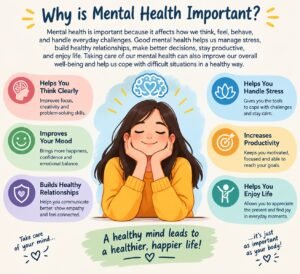
Mental health is important because it affects how we think, feel, behave, and handle everyday challenges. Good mental health helps us manage stress, build healthy relationships, make better decisions, stay productive, and enjoy life. Taking care of our mental health can also improve our overall well-being and help us cope with difficult situations in a healthy way.